What Happens After Your Offer Is Accepted In The Netherlands?
Use this guide to organise the steps after a seller accepts your offer. Start with the written agreement and its deadlines, then track the financing, valuation, inspection, notary and transfer questions that still need an answer.

Summary: Use this guide to organise the steps after a seller accepts your offer. Start with the written agreement and its deadlines, then track the financing, valuation, inspection, notary and transfer questions that still need an answer.
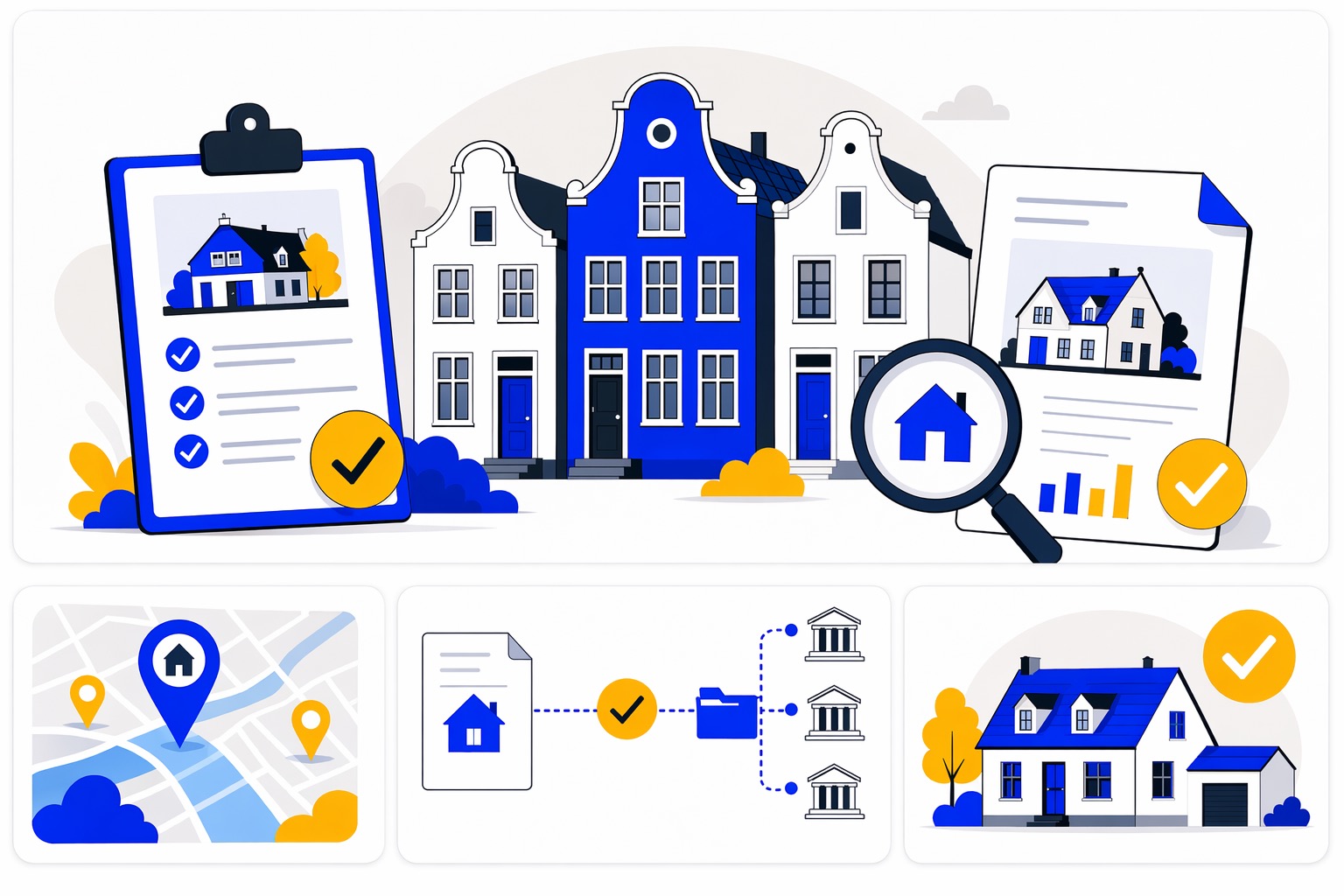
Review the agreement, the deadlines and the evidence as separate checks before the next step becomes urgent.

Once your offer on a Dutch home is accepted, the next step is to turn that acceptance into a documented plan. Check the purchase agreement, deadlines, financing, valuation, inspection and transfer details before the process moves too quickly.
How Long Does The Dutch Buying Process Take?
A short overview of the Dutch buying timeline, from preparation and viewings to an accepted offer, financing, checks and the notarial transfer.
Summary
Use this guide to organise the steps after a seller accepts your offer. Start with the written agreement and its deadlines, then track the financing, valuation, inspection, notary and transfer questions that still need an answer.
What This Means In The Dutch Buying Process
The period after offer acceptance rewards buyers who prepare before the first deadline starts. Review the agreed price, conditions and dates while the details are still clear, because the next steps can affect financing, valuation, inspection and notary timing.
A normal buyer path has a few fixed pieces: you define your budget, view homes, make an offer, sign a purchase agreement, use the cooling-off period where it applies, arrange mortgage and valuation steps, prepare for the notary, inspect the home before transfer and receive the keys. Official Dutch guidance from Rijksoverheid and notary guidance from Notaris.nl should be checked when deadlines, contract wording or transfer steps matter.
Buyer Checks Before You Act
Use these checks before the next viewing, bid or signature:
- Before bidding, write down the highest price you can defend after a lower valuation. That number is more useful than the number you hope will win.
- Check which conditions belong in the offer before the deadline. A financing condition, structural inspection condition or valuation-related condition must be discussed early.
- Keep the buyer file short enough to use under pressure: one decision note, one document folder, one deadline list and one question list.
- If the answer affects your bid, get it before bidding. If it affects transfer, get it before signing. If it affects life after keys, budget for it before your final price.
- Check whether the page topic changes your budget, your bid conditions, your document list or your transfer timing.
- Decide who should verify the fact: mortgage adviser for lending, notary for legal transfer, valuer for market value, inspector for condition, municipality for permits.
- Record assumptions as assumptions. A seller comment, a listing note and a verbal answer are not the same as a document you can rely on.
How To Use This Page With Your Buyer File
Your buyer file should be boring in the best way. It should show what you know, what you assume, what is missing and who should verify the missing piece. A buyer file does not need beautiful formatting. It needs to help you make a better decision under time pressure.
Keep four working lists:
- Property facts from the listing, viewing and documents.
- Money facts from your savings, mortgage range, buyer costs and possible cash gap.
- Deadline facts from the bid, purchase agreement, financing condition, valuation, notary and transfer date.
- Professional questions for the mortgage adviser, notary, valuer, inspector, municipality or buyer agent.
After your offer is accepted, mark every item that could change your price, conditions or timing. Those items deserve an answer before you commit further.
After You Make An Offer On A Dutch House: What Happens Next?
Keep the seller’s response, agreed conditions and next deadlines together in your buyer file. Use this Short as a visual prompt, then confirm the legal and financial details in the written agreement and with the right professional.
Decision Note To Keep
Before you close this page, write one short note that starts with: "For this home, the next action after offer acceptance changes because:" Then finish the sentence with the money, document, timing or property issue that matters most. This small note keeps the decision tied to the actual house in front of you.
The note also helps when you speak with a mortgage adviser, notary, valuer, inspector or buyer agent. Instead of asking a broad question, you can show the exact assumption you made and ask whether it is safe enough to use before the next deadline.
Where Professional Advice Fits
Real Estate Minion can help you organize the buying question and see what to ask next. Some answers still belong with regulated or specialist professionals.
- A mortgage adviser should check borrowing power, lender documents, financing-condition risk and whether calculator results match your situation.
- A notary should explain transfer, deed, ownership, partner and purchase-agreement questions.
- A valuer should handle market-value reporting when the lender needs a valuation report.
- A structural inspector should check property condition where defects or repair costs matter.
- A tax adviser or lawyer should handle tax, legal or cross-border questions that could affect your personal position.
Mortgage estimate and calculator questions belong with Orange Fox. Local valuation-service questions belong with Cheetah Valuations when the property or question is local to that service area.
Internal Links For Your Next Step
If you are still mapping the whole process, use the Netherlands home buying checklist alongside this page.
If money or timing is already unclear, start with mortgage readiness before you bid.
For help turning this into a practical next step, request a buyer consultation.
Related reading: From Viewing To Offer In The Dutch Buying Process and Buying A House In The Netherlands Without Speaking Dutch.
FAQ
What is the first thing to check after your offer is accepted?
Start with budget, documents and timing. If those three are unclear, every viewing and offer decision becomes harder to judge.
Does offer acceptance change the Dutch buying process?
Usually it changes the order of checks more than the legal process itself. The purchase agreement, cooling-off period, valuation, mortgage steps, notary transfer and Kadaster registration still matter.
Can I manage the next steps without a buyer agent?
Some buyers can, especially when the situation is simple and they speak enough Dutch to review documents. Complex properties, fast bids, VvE issues, leasehold, renovation risk or financing uncertainty make extra help more useful.
When should I speak with a mortgage adviser?
Speak with a mortgage adviser before bidding if the answer affects your maximum budget, financing condition, valuation risk, NHG eligibility or savings buffer.
When should I speak with the notary?
Speak with the notary when ownership, purchase agreement wording, transfer timing, partner ownership, power of attorney or deed questions need professional review.
When does a valuation report matter?
A valuation report matters when the mortgage lender needs market value support. It also matters when a high offer creates a possible cash gap.
What documents should I collect first?
Start with income proof, identification, savings proof, mortgage readiness notes, the listing, property documents, VvE documents for apartments and your viewing notes.
Should I rely on the listing text?
Use listing text as a starting point. Verify facts through documents, professional checks, official sources or written answers before they affect your bid.
What should go into my buyer file?
Keep the listing, photos, viewing notes, budget range, mortgage notes, document checklist, deadline list, questions for professionals and final decision note together.
How do I avoid overpaying?
Set a maximum price before bidding, test that price against mortgage range and valuation risk, and decide which defects or document gaps would reduce the offer.
What if another buyer moves faster?
Fast competition is common. Do not remove conditions or skip checks only because another buyer might. Decide in advance which risks you can carry.
Can the checklist replace professional advice?
No. A checklist helps you prepare and ask better questions. It does not replace a mortgage adviser, notary, valuer, inspector, tax adviser or lawyer.
What should I ask during a buyer consultation?
Ask about the next deadline, missing documents, bid readiness, risk signals, which professional should verify each issue and what to do before the next viewing or offer.
How many viewings should I do before bidding?
There is no fixed number. A second viewing helps when condition, layout, noise, light, VvE documents, renovation plans or emotional pressure need a calmer check.
What is the biggest timing mistake?
The common timing mistake is waiting until after the offer to ask questions that should shape the offer conditions and final price.
What if I do not understand a Dutch term?
Pause and define it in the context of the purchase. Dutch buying terms can affect deadlines, money or legal transfer, so guessing is risky.
Should I include a financing condition?
That depends on your mortgage certainty, risk appetite and market pressure. Discuss it with a mortgage adviser before bidding.
Should I include a structural inspection condition?
Consider it when the home is older, renovated, visibly defective, unusual, or when repair costs would change your maximum price.
What should I do after reading this page?
Open the checklist, add the missing questions to your buyer file, and decide which answer you need before the next viewing, bid or signature.
Where does this fit in buying a house in the Netherlands?
What Happens After Your Offer Is Accepted In The Netherlands sits inside the practical buyer journey: prepare budget and documents, view carefully, bid with conditions, sign knowingly, arrange mortgage and valuation, then complete transfer through the notary.