Mortgage Readiness For Dutch Home Buyers
Use this guide to turn Dutch mortgage readiness for expats into a buyer-ready finance file: check income evidence, debts, savings, valuation risk, NHG fit, tax questions and offer deadlines before the house search becomes time-sensitive.

Summary: Use this guide to turn Dutch mortgage readiness for expats into a buyer-ready finance file: check income evidence, debts, savings, valuation risk, NHG fit, tax questions and offer deadlines before the house search becomes time-sensitive.

Use the first document check to identify what a lender, valuer or adviser still needs before your offer deadline.
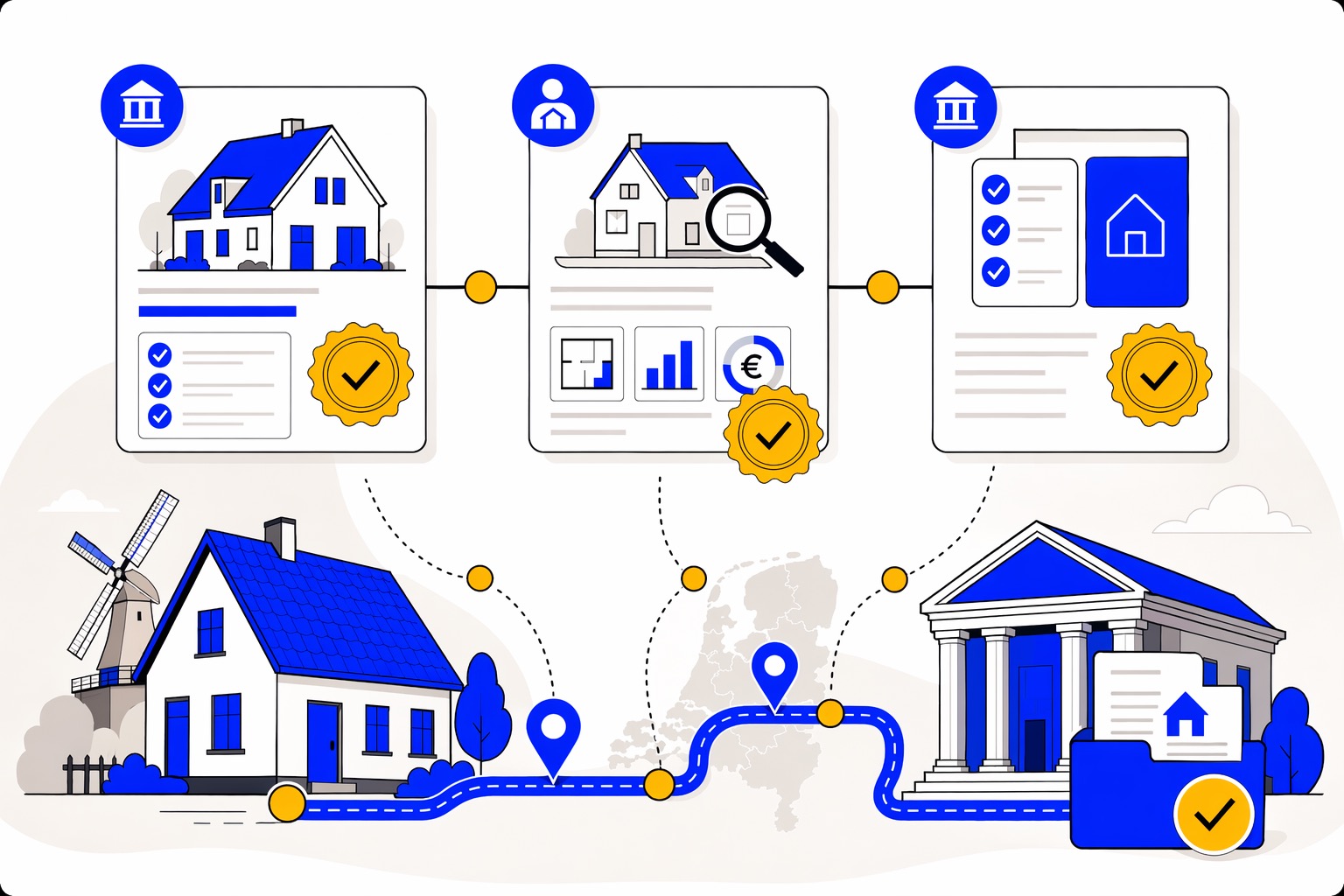
Dutch mortgage readiness for expats is a mortgage-readiness question first and a house-search question second. Before you bid, you need to know which income, debt, savings, property-value and deadline facts a mortgage adviser or lender will still need to test.
The Complete Beginner's Guide to Mortgages for Expats and the 30% Ruling
A guide to mortgage preparation for expat buyers, including lender questions, income and residence documents, affordability planning and the 30% ruling.
Summary
Use this guide to turn Dutch mortgage readiness for expats into a buyer-ready finance file: check income evidence, debts, savings, valuation risk, NHG fit, tax questions and offer deadlines before the house search becomes time-sensitive.
What This Means For A Dutch Mortgage File
A clean mortgage file is not the same as a high maximum number. The useful question is what a lender can verify, which conditions belong in the offer, and how much room remains if the valuation or timing is less friendly than expected.
A useful mortgage file answers five questions in plain language: what income can be verified, what debt must be included, how much savings remain after buyer costs, what value the lender may accept for the property, and which deadline could put the buyer under pressure.
This is why mortgage readiness should happen before the emotional part of the home search takes over. A house can look right, but the finance file still needs to make sense on paper.
The Money Rule To Check First
Rijksoverheid explains that the maximum mortgage depends on income and the value of the home, and that the mortgage can normally go up to 100 percent of the home value. That means a higher bid does not automatically create a higher loan. Check the current official page on maximum mortgage amount when you are close to bidding.
Mortgage norms also change by year. The 2026 lending-norm update says many households can borrow somewhat more when income rises, but the exact room is personal. Use Rijksoverheid’s 2026 lending-norm update</a> and the <a href="https://www.nibud.nl/onderzoeksrapporten/rapport-advies-hypotheeknormen-2026-2025/">Nibud mortgage-norm report as background, then ask an adviser to calculate your own file.
Buyer Checks Before You Bid
Use these checks before the next viewing, offer or contract deadline:
- Ask which income figure the adviser can use and which documents are still missing.
- Check the 100 percent value rule before you assume the full offer price can be borrowed.
- Separate your maximum mortgage from your comfortable monthly payment.
- List buyer costs that need savings, including notary, valuation, advice, inspection, transfer tax where relevant and moving costs.
- Decide whether a financing condition should be part of the offer before the bid deadline.
- Check whether the property type creates extra lender or valuation questions.
- Keep one dated list for offer deadline, purchase agreement, cooling-off period, valuation, mortgage offer and notary transfer.
- Save the evidence behind every number: income, savings, debt, gift, loan, renovation budget and expected monthly payment.
Documents To Prepare Early
The exact document list depends on the lender and personal situation, but a buyer should not wait until the purchase agreement is signed to start collecting evidence. Prepare the common file first, then ask the adviser what is missing.
- passport or identity document;
- residence or work-status document where relevant;
- recent payslips, employer statement or income overview;
- employment contract, assignment contract or business documents;
- annual income statement and tax return where requested;
- savings proof and expected buyer-cost buffer;
- student debt, personal loan, credit-card and other debt information;
- property listing, purchase price, expected transfer date and offer conditions;
- valuation timing and any documents the valuer may need.
Property Value, Valuation And Cash Gap
The lender does not only look at the buyer. The lender also looks at the property. The accepted price, valuation report, property documents and transfer timing can all affect whether the finance file stays simple.
A clean offer plan should include a cash-gap note. Write down the highest price you can defend if the lender-supported value is lower than your offer. This number is more useful than a hopeful maximum, because it tells you whether a lower valuation is annoying, painful or impossible.
For local valuation-service questions, use Cheetah Valuations when the property or valuation need fits. For the buyer-side decision, keep the valuation date, report deadline and financing-condition date on the same list.
NHG, Energy Measures And Buyer Costs
NHG can be relevant when the purchase price, valuation and mortgage structure fit the rules. In 2026, NHG announced a standard limit of EUR 470,000 and EUR 498,200 where qualifying energy-saving measures fit. Always check the current NHG limit before relying on a number in an offer plan.
Buyer costs still need attention even when NHG fits. Notary, valuation, advice, inspection, transfer tax where relevant, moving and first repairs can all need cash. A buyer who only checks the mortgage maximum may still be underprepared.
Tax And Monthly Payment Questions
Mortgage readiness also includes tax and payment questions. The Belastingdienst own-home pages explain that buying, selling, financing and owning a home can affect income tax. Mortgage-interest deduction, deductible costs and the owner-home value addition should be checked with a qualified adviser when the amounts matter.
Do not let tax benefits make an uncomfortable payment look comfortable. First decide whether the monthly payment works without optimistic assumptions. Then ask which tax rules may apply to your own situation.
How This Affects Your Offer
A mortgage question becomes an offer question when it changes price, conditions or timing. If the answer is unknown, the offer should not pretend the risk is solved.
Before sending a bid, decide which answer must come from the mortgage adviser, which answer belongs with the notary, and which answer needs the valuer or inspector.
Do not remove a financing condition only because the market is competitive. First check whether the mortgage file, property value and savings buffer are strong enough to carry that choice.
What To Do If A Mortgage Application Is Rejected
If a mortgage application is rejected, pause before making another offer or changing the finance condition. Check whether the decision relates to income evidence, debts, affordability, property value, employment status or missing documents, then ask the mortgage adviser which facts can be corrected and which cannot.
Questions To Ask Before The Next Step
Bring these questions to the right professional before the next deadline:
- Which income number can the lender actually use?
- Which documents are still missing or weak?
- Which debts or monthly obligations reduce the calculation?
- What price creates valuation risk?
- How much savings should remain after transfer?
- Does NHG fit, and what would change if it does not?
- Is the financing-condition deadline realistic?
- What would make this bid too risky?
Official Pages To Check
Keep these official pages close when the numbers or rules matter:
- Rijksoverheid: maximum mortgage amount
- Rijksoverheid: mortgage application steps
- Belastingdienst: own home and mortgage tax
Related Pages
- Read the main mortgage readiness guide if you need the full buyer-finance checklist.
- Use the Netherlands home buying checklist to keep the finance, viewing and notary tasks in one place.
- For a finance estimate or mortgage-calculator question, use Orange Fox.
- For local valuation-service questions, use Cheetah Valuations when the property or valuation need fits.
- Related finance pages: Mortgage Readiness For Dutch Home Buyers and Mortgage Readiness For Dutch Home Buyers.
FAQ
What is the first step for Dutch mortgage readiness for expats?
Start by asking what the lender or mortgage adviser must verify. Then collect the income, savings, debt and property documents that support the answer.
Does Dutch mortgage readiness for expats affect how much I can borrow?
It can. Income evidence, debts, property value, NHG fit, interest rate and monthly obligations can all change the final mortgage range.
Should I use a mortgage calculator first?
Yes, but only as an orientation step. For calculator intent, use Orange Fox and then confirm the result with a mortgage adviser who can check your documents.
When should I ask a mortgage adviser about Dutch mortgage readiness for expats?
Ask before bidding if the answer can change price, conditions, valuation risk, NHG eligibility, savings buffer or the financing deadline.
What is the 100 percent value rule?
The mortgage is normally limited by the home value as well as income. If the lender-supported value is lower than the offer, the gap may need savings.
How much savings should I keep after transfer?
Keep a buffer for buyer costs, repairs, moving, furnishing, municipal charges and the first months of ownership. The right amount depends on the home and your income stability.
Can I rely on an online maximum mortgage estimate?
Use it for orientation only. A real file check needs documents, debts, property value, rate assumptions and lender policy.
When does the financing condition matter most?
It matters when mortgage approval is not yet final, the valuation could be lower than the offer, or the documents may take time.
What happens if the mortgage offer is late?
You may need an extension, a condition deadline decision or legal advice. Track the date before it becomes urgent.
Should I talk to the notary about mortgage readiness?
The notary is not the mortgage adviser, but notary questions can affect ownership, transfer date, mortgage deed and partner choices.
What tax questions should I save?
Save questions about mortgage interest deduction, deductible costs, owner-home rules and any cross-border tax position for the adviser or tax professional.
Does a higher income always mean a safe bid?
No. A safe bid also depends on property value, debts, buyer costs, rate comfort, repairs and the cash left after transfer.
What should I bring to a buyer consultation?
Bring the listing, target price, income situation, savings buffer, debts, mortgage estimate, preferred transfer date and any unanswered finance questions.
How does this fit into buying a house in the Netherlands?
Mortgage Readiness For Dutch Home Buyers sits before bidding and signing. It helps you decide whether the money, documents and deadlines are ready enough for the next buying step.
Can Real Estate Minion replace mortgage advice?
No. Real Estate Minion helps organize the buyer question and next steps. Mortgage advice should come from a qualified mortgage adviser.
What should I do after reading this page?
Create a short mortgage-readiness note, add missing documents to your file and ask the right adviser before the next viewing, bid or signature.
Should I check the mortgage file before a second viewing?
Yes. A second viewing is often the moment to decide whether the property is worth a serious bid, so the finance file should already be realistic.
Can a low valuation change the final mortgage?
Yes. If the lender-supported value is lower than the agreed price, the buyer may need extra savings or a different condition decision.
Do buyer costs fit inside the mortgage?
Usually many buyer costs need savings. Ask which costs are financeable and which costs must be paid from cash.
When should I update my mortgage estimate?
Update it when income, debts, rates, property value, transfer timing, NHG fit or savings change.