Should You Use A Buying Agent In The Netherlands?
Use this guide to decide whether a buying agent belongs in your plan. Start with budget and document readiness, clarify property and timing risks before bidding, record questions for each professional and keep the next action small enough to complete before pressure builds.

Summary: Use this guide to decide whether a buying agent belongs in your plan. Start with budget and document readiness, clarify property and timing risks before bidding, record questions for each professional and keep the next action small enough to complete before pressure builds.
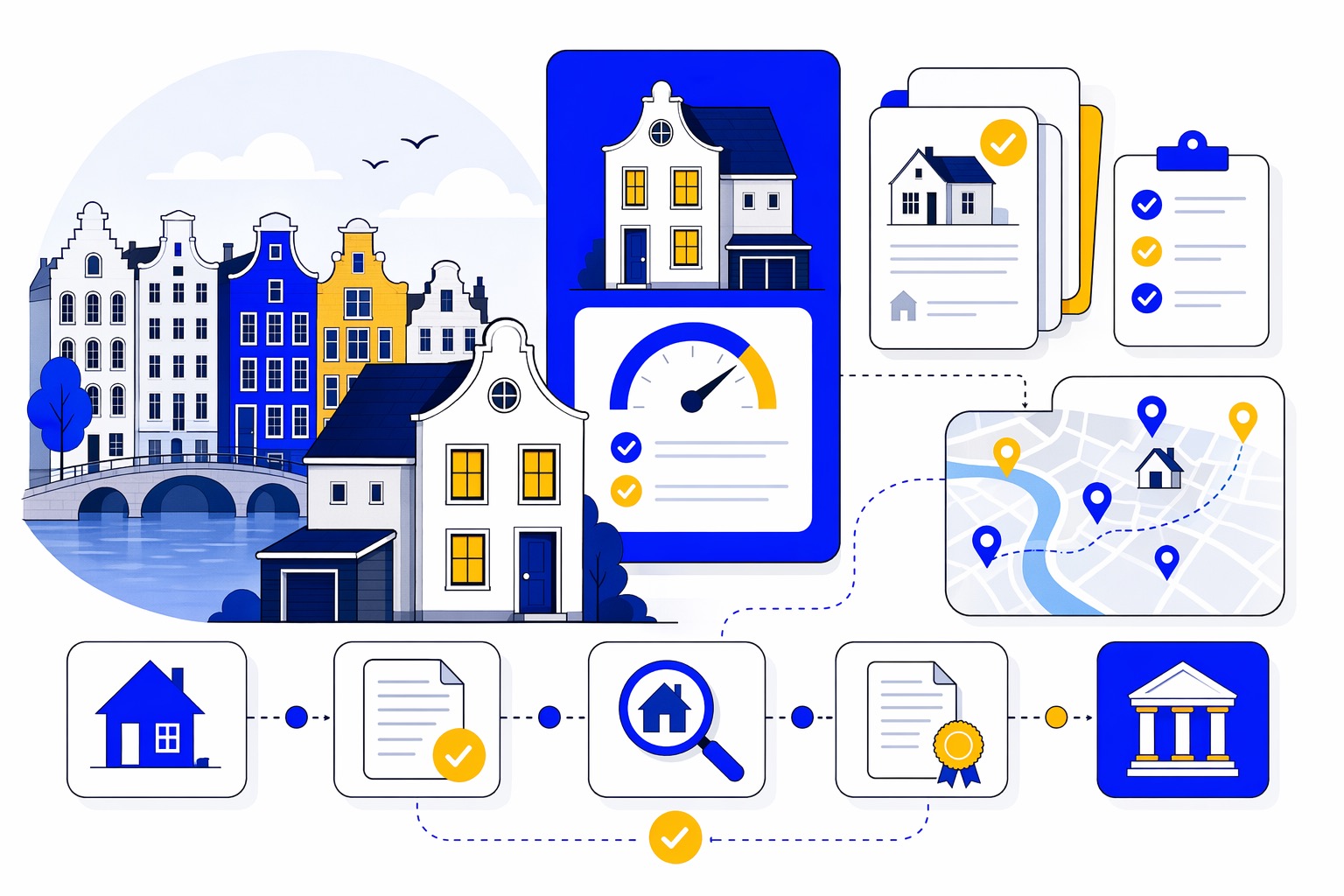
Use these visuals as prompts for your agent questions: ask who verifies property evidence, which documents are reviewed and how the advice affects your next decision.
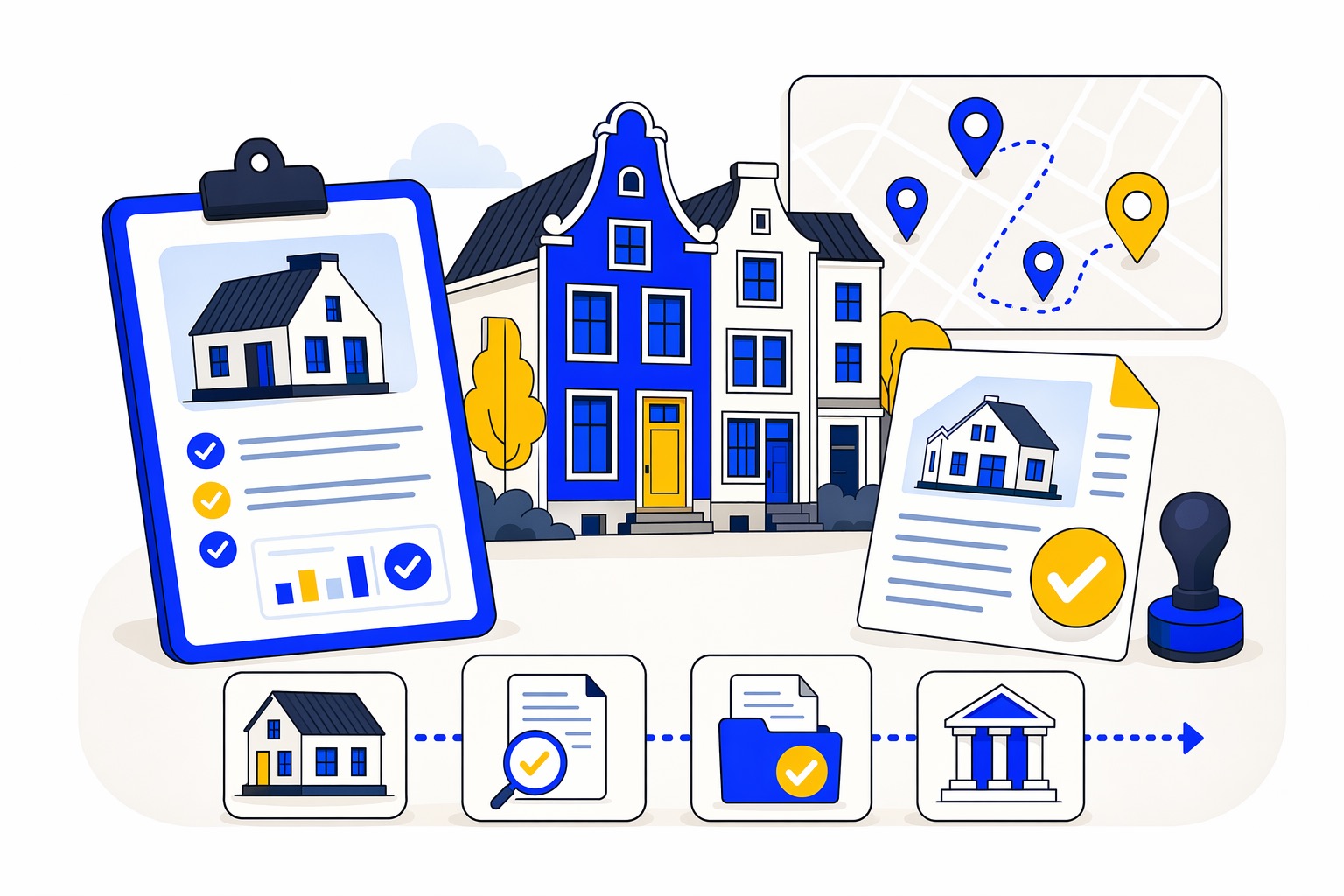
Choosing a buying agent in the Netherlands is a practical decision, not a phrase to collect and forget. This guide explains what to check, which Dutch steps affect timing, where documents and professional advice fit, and how to keep the buying decision calm enough to act on.
Do You Need A Buying Agent?
This short guide helps you weigh the local knowledge, time and support a buying agent can provide against handling the search, checks and coordination yourself.
Summary
Use this guide to decide whether a buying agent belongs in your plan. Start with budget and document readiness, clarify property and timing risks before bidding, record questions for each professional and keep the next action small enough to complete before pressure builds.
What This Means In The Dutch Buying Process
The Dutch home-buying process rewards buyers who prepare before a deadline starts. Deciding whether to use a buying agent can affect your viewing list, bid ceiling, offer conditions, mortgage timing or notary transfer.
A normal buyer path has a few fixed pieces: you define your budget, view homes, make an offer, sign a purchase agreement, use the cooling-off period where it applies, arrange mortgage and valuation steps, prepare for the notary, inspect the home before transfer and receive the keys. Official Dutch guidance from Rijksoverheid and notary guidance from Notaris.nl should be checked when deadlines, contract wording or transfer steps matter.
Buyer Checks Before You Act
Use these checks before the next viewing, bid or signature:
- Clarify who is responsible for search, document review, negotiation, offer wording, valuation timing, mortgage advice and notary questions.
- A buyer agent can help with market judgment, but the notary, mortgage adviser and valuer each own separate parts of the buying decision.
- Record assumptions as assumptions. A seller comment, a listing note and a verbal answer are not the same as a document you can rely on.
- Keep the buyer file short enough to use under pressure: one decision note, one document folder, one deadline list and one question list.
- If the answer affects your bid, get it before bidding. If it affects transfer, get it before signing. If it affects life after keys, budget for it before your final price.
- Check whether the page topic changes your budget, your bid conditions, your document list or your transfer timing.
- Decide who should verify the fact: mortgage adviser for lending, notary for legal transfer, valuer for market value, inspector for condition, municipality for permits.
Finding A Trustworthy Real Estate Agent
Before appointing an agent, ask for a written scope that names the search area, viewing support, document review, negotiation, offer wording and coordination included in the service.
Ask how the fee works, when it is payable and how the agent handles questions outside the agreed scope. Clear responsibilities make it easier to compare support with managing the process yourself.
How Can Expats Find a Trustworthy Real Estate Agent in the Netherlands? | Real Estate Minion
A practical prompt for expat buyers comparing real estate agents: clarify the agent’s role, fee, communication, search area and responsibilities before you sign an engagement agreement.
Use this Short as a prompt to write down the questions you want answered before you appoint an agent or rely on advice during a fast bid.
Should You Hire An Expat Real Estate Advisor?
An expat real estate advisor may be useful when you want help comparing local options, organising questions or coordinating the next step. The right scope depends on your property, budget, language needs and preference for handling the process yourself.
Before paying for a service, compare its scope, fee, communication process and responsibility for document or offer questions. Keep legal, mortgage, valuation and condition questions with the professional who is qualified to answer them.
Should You Hire an Expat Real Estate Advisor in the Netherlands? | Real Estate Minion
A short prompt for expat buyers deciding how much local search support, coordination and professional guidance they want before moving ahead with a Dutch home purchase.
Use this Short as a prompt to review which kind of local support would make your next buyer-file decision clearer.
How To Use This Page With Your Buyer File
Your buyer file should be boring in the best way. It should show what you know, what you assume, what is missing and who should verify the missing piece. A buyer file does not need beautiful formatting. It needs to help you make a better decision under time pressure.
Keep four working lists:
- Property facts from the listing, viewing and documents.
- Money facts from your savings, mortgage range, buyer costs and possible cash gap.
- Deadline facts from the bid, purchase agreement, financing condition, valuation, notary and transfer date.
- Professional questions for the mortgage adviser, notary, valuer, inspector, municipality or buyer agent.
For the agent decision, mark every item that could change your price, conditions or timing. Those items deserve an answer before you commit further.
Decision Note To Keep
Before you close this page, write one short note that starts with: "For this home, the agent question that changes my next action is". Then complete the sentence with the money, document, timing or property issue that matters most. This small note keeps the decision tied to the actual house in front of you.
The note also helps when you speak with a mortgage adviser, notary, valuer, inspector or buyer agent. Instead of asking a broad question, you can show the exact assumption you made and ask whether it is safe enough to use before the next deadline.
Where Professional Advice Fits
Real Estate Minion can help you organize the buying question and see what to ask next. Some answers still belong with regulated or specialist professionals.
- A mortgage adviser should check borrowing power, lender documents, financing-condition risk and whether calculator results match your situation.
- A notary should explain transfer, deed, ownership, partner and purchase-agreement questions.
- A valuer should handle market-value reporting when the lender needs a valuation report.
- A structural inspector should check property condition where defects or repair costs matter.
- A tax adviser or lawyer should handle tax, legal or cross-border questions that could affect your personal position.
Mortgage estimate and calculator questions belong with Orange Fox. Local valuation-service questions belong with Cheetah Valuations when the property or question is local to that service area.
Internal Links For Your Next Step
If you are still mapping the whole process, use the Netherlands home buying checklist alongside this page.
If money or timing is already unclear, start with Mortgage readiness before you bid.
For help turning this into a practical next step, request a Buyer consultation.
Related reading: Buying A House In The Netherlands Without Speaking Dutch and Buying A House In The Netherlands Without A Buying Agent.
FAQ
What Should I Check First When Choosing A Buying Agent In The Netherlands?
Start with budget, documents and timing. If those three are unclear, every viewing and offer decision becomes harder to judge.
Does A Buying Agent Change The Dutch Buying Process?
Usually it changes the order of checks more than the legal process itself. The purchase agreement, cooling-off period, valuation, mortgage steps, notary transfer and Kadaster registration still matter.
Can I Manage The Purchase Without A Buying Agent?
Some buyers can, especially when the situation is simple and they speak enough Dutch to review documents. Complex properties, fast bids, VvE issues, leasehold, renovation risk or financing uncertainty make extra help more useful.
When should I speak with a mortgage adviser?
Speak with a mortgage adviser before bidding if the answer affects your maximum budget, financing condition, valuation risk, NHG eligibility or savings buffer.
When should I speak with the notary?
Speak with the notary when ownership, purchase agreement wording, transfer timing, partner ownership, power of attorney or deed questions need professional review.
When does a valuation report matter?
A valuation report matters when the mortgage lender needs market value support. It also matters when a high offer creates a possible cash gap.
What documents should I collect first?
Start with income proof, identification, savings proof, mortgage readiness notes, the listing, property documents, VvE documents for apartments and your viewing notes.
Should I rely on the listing text?
Use listing text as a starting point. Verify facts through documents, professional checks, official sources or written answers before they affect your bid.
What should go into my buyer file?
Keep the listing, photos, viewing notes, budget range, mortgage notes, document checklist, deadline list, questions for professionals and final decision note together.
How do I avoid overpaying?
Set a maximum price before bidding, test that price against mortgage range and valuation risk, and decide which defects or document gaps would reduce the offer.
What if another buyer moves faster?
Fast competition is common. Do not remove conditions or skip checks only because another buyer might. Decide in advance which risks you can carry.
Can the checklist replace professional advice?
No. A checklist helps you prepare and ask better questions. It does not replace a mortgage adviser, notary, valuer, inspector, tax adviser or lawyer.
What should I ask during a buyer consultation?
Ask about the next deadline, missing documents, bid readiness, risk signals, which professional should verify each issue and what to do before the next viewing or offer.
How many viewings should I do before bidding?
There is no fixed number. A second viewing helps when condition, layout, noise, light, VvE documents, renovation plans or emotional pressure need a calmer check.
What is the biggest timing mistake?
The common timing mistake is waiting until after the offer to ask questions that should shape the offer conditions and final price.
What if I do not understand a Dutch term?
Pause and define it in the context of the purchase. Dutch buying terms can affect deadlines, money or legal transfer, so guessing is risky.
Should I include a financing condition?
That depends on your mortgage certainty, risk appetite and market pressure. Discuss it with a mortgage adviser before bidding.
Should I include a structural inspection condition?
Consider it when the home is older, renovated, visibly defective, unusual, or when repair costs would change your maximum price.
What should I do after reading this page?
Open the checklist, add the missing questions to your buyer file, and decide which answer you need before the next viewing, bid or signature.
Where Does Using A Buying Agent Fit In The Dutch Buying Process?
Using a buying agent sits inside the practical buyer journey: prepare budget and documents, view carefully, bid with conditions, sign knowingly, arrange mortgage and valuation, then complete transfer through the notary.